A Beginner's Guide to Paint Sprayers for DIY Projects
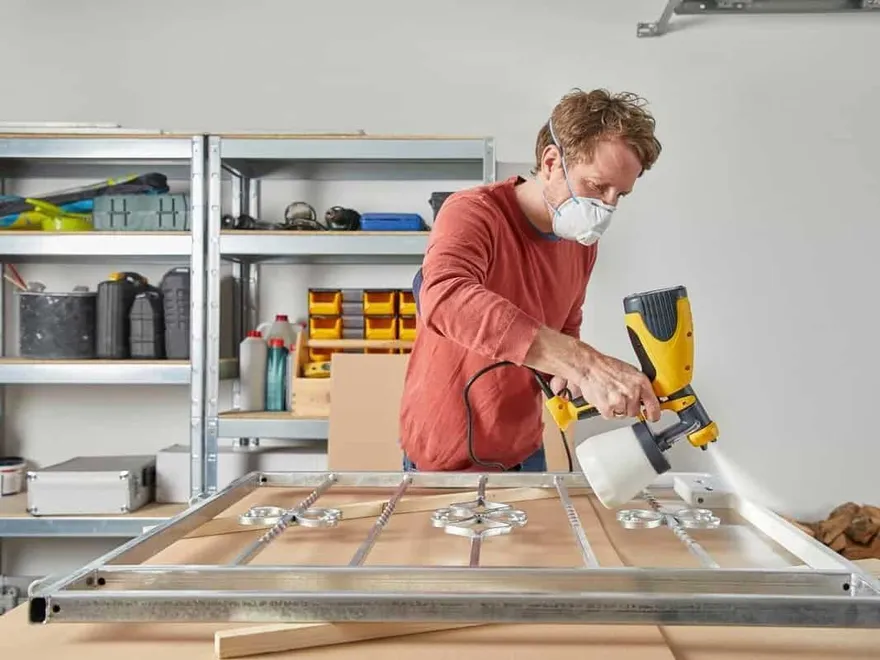
Paint sprayers are a great tool for DIYers in the UK looking to tackle home painting projects with speed and a smooth finish compared to brushes or rollers. This advice is tailored for non-professionals, so it focuses on what hobbyists and casual users need to know.
Types of Paint Sprayers
Airless sprayers pump paint at high pressure through a small nozzle for even coverage. They’re good for large surfaces like walls, ceilings, or fences and can handle thicker paints like emulsion or latex without thinning.
Brands like Wagner or VonHaus are accessible for DIYers. They suit bigger home projects but can produce overspray, so you’ll need to mask areas well.
HVLP (High Volume, Low Pressure) sprayers use a turbine for a controlled, low-pressure stream, cutting down on overspray. They’re perfect for smaller or detailed tasks like furniture, cabinets, or garden sheds and work well with thinner paints like varnishes or stains.
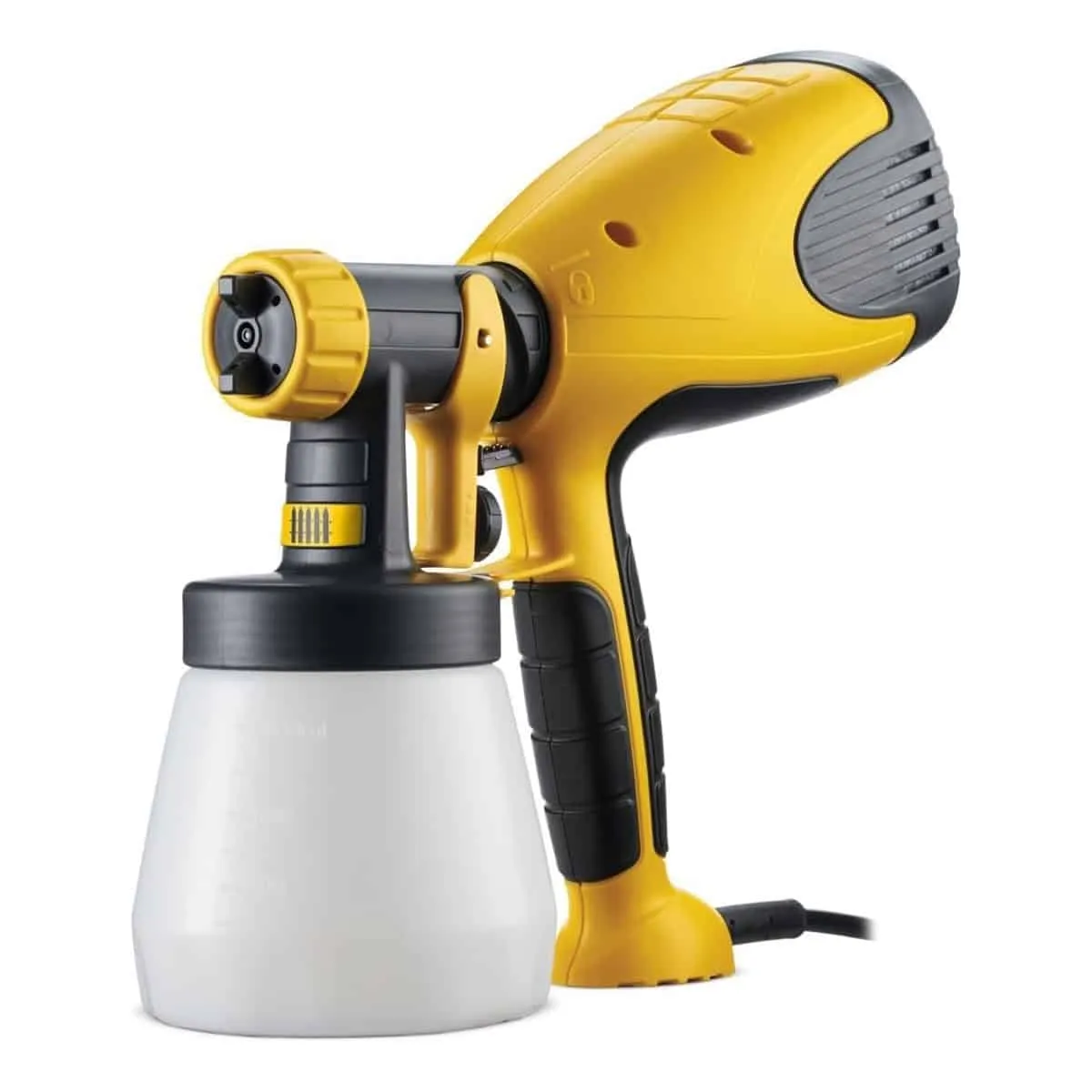
Wagner’s W 100 is a budget-friendly HVLP choice for beginners.
Available from amazon.co.uk
XVLP (Extra Volume, Low Pressure) sprayers are versatile for mixed projects but less common for casual use.
Cordless sprayers, like those from Bosch or KATSU, offer portability for outdoor jobs like fences or decking where power sockets aren’t nearby. They’re convenient but may need frequent recharges or refills due to smaller paint containers.
Key Features to Consider
Power matters: 280W-400W is plenty for small home projects, like the VonHaus 400W for fences or walls, while 600W-800W suits larger jobs.
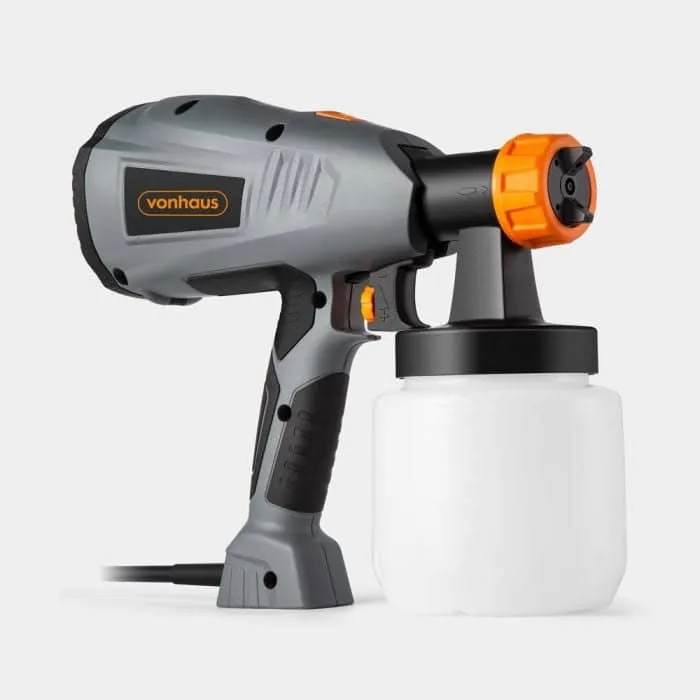
Vonhaus 400W Paint Sprayer Gun
Available from amazon.co.uk
Paint container sizes range from 600ml to 1400ml. Smaller ones, like Wagner W 100’s 800ml, mean more refills but are lighter and easier to handle, while larger ones, like Tilswall’s 1300ml, are better for bigger areas.
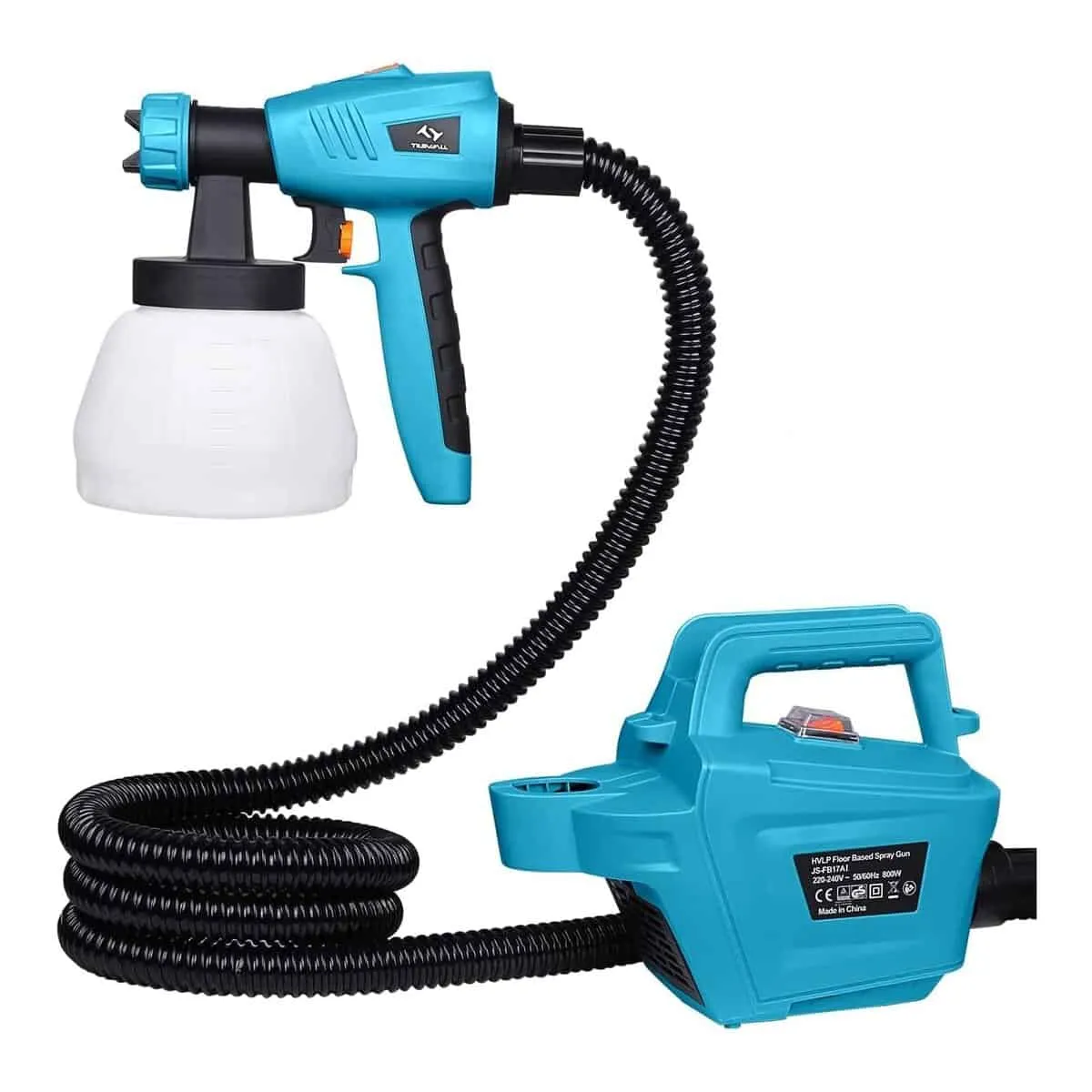
Tilswall Pro 800W
Available from amazon.co.uk
Check the sprayer’s viscosity rating (in DIN/sec). Higher ratings, like 120 DIN/sec for Tilswall, handle thicker paints without clogging, but always check paint thinning instructions.
Adjustable nozzles (vertical, horizontal, or circular patterns) let you control paint flow and direction. Multiple nozzle sizes (1.0mm to 2.6mm) work for different paints and surfaces.
Look for sprayers with detachable containers and cleaning kits, like Wagner’s brushes, to make cleanup easier for DIYers. Cordless models with low overspray tech are user-friendly for quick cleanup.
Benefits
Sprayers cover large areas 7-15 times faster than brushes or rollers, making them ideal for home projects like walls, fences, or decking. They give a smooth finish without brush marks or roller texture, great for plastered walls or furniture.
They’re versatile for paints like emulsion, latex, varnish, or stains and surfaces like wood, metal, or plaster. HVLP sprayers are especially good for detailed home projects, while airless ones handle bigger surfaces.
Cordless models or long hoses, like Tilswall’s 2.5m hose, help reach tricky spots like corners or behind pipes.
Drawbacks
Airless sprayers create mist, so you’ll need to cover areas with masking tape, dust sheets, or film. HVLP sprayers produce less overspray, which is easier for beginners. Spraying takes practice to avoid drips or uneven coats, so expect a learning curve with adjusting pressure or nozzles.
Cleaning is a must to prevent clogs, especially if you switch paint types, and can feel tedious for casual users. Larger models, like Ginour, can be heavy and tiring to hold. Lighter ones, like Wagner W 100 (1.1kg), are better for comfort during DIY jobs.
Popular Brands for DIYers in the UK
Wagner offers beginner-friendly HVLP and airless models, like the W 100 for budget-conscious users or the ControlPro 250M for more features, great for home fences, walls, or furniture.
VonHaus has affordable options like the 400W or 800W sprayers, perfect for DIY walls or fences.
Tilswall’s 800W models with large containers and flexible hoses are good for varied home tasks.
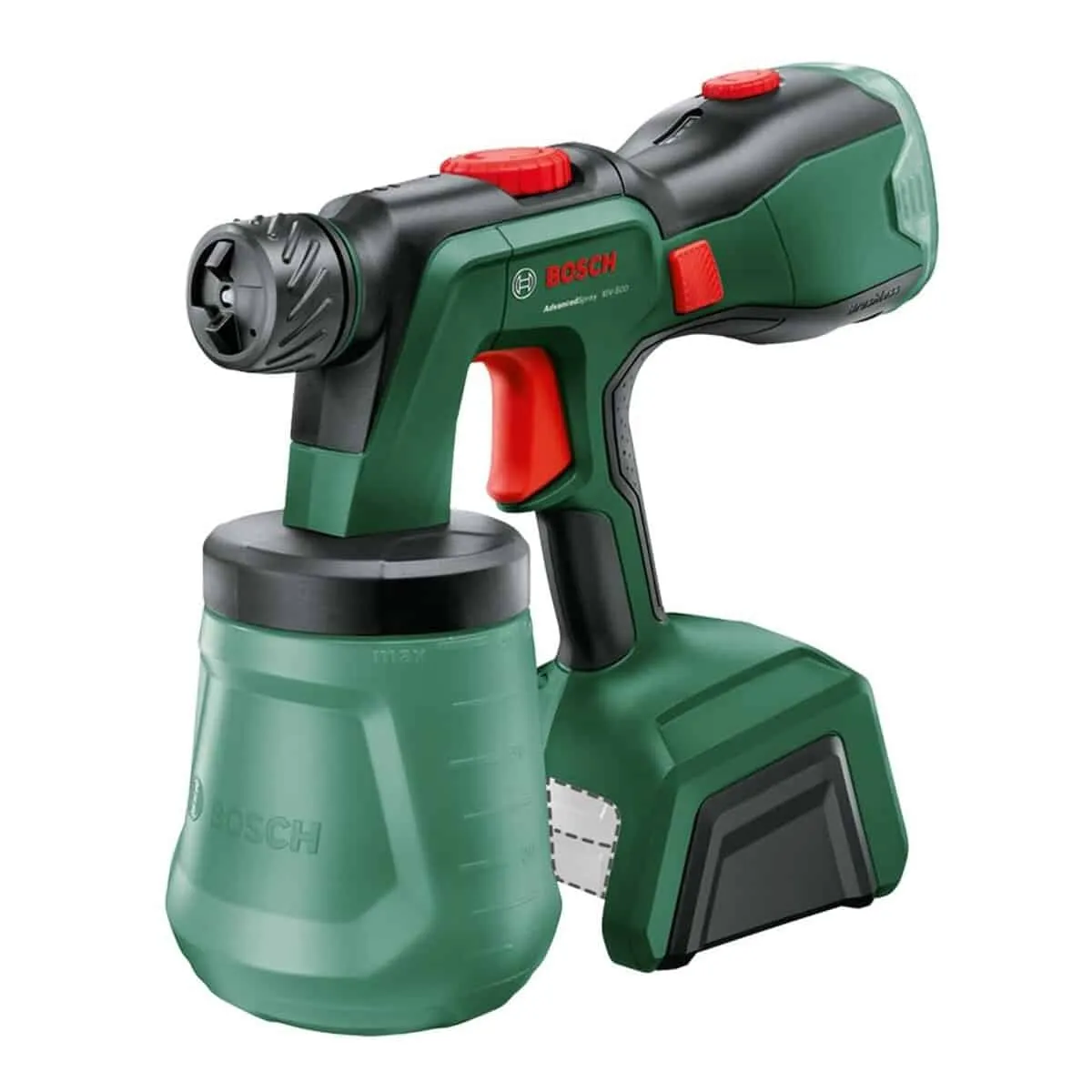
Bosch’s cordless models, like the AdvancedSpray 18V-500, are ideal for smaller, portable DIY jobs.
Available from amazon.co.uk
Choosing the Right Sprayer
For bigger home projects like walls, ceilings, or fences, go for an airless sprayer with 600W+ power and a larger container (1200ml+), like Wagner or VonHaus models.
For smaller or detailed tasks like furniture or cabinets, pick an HVLP sprayer like Wagner W 100 or a Bosch cordless model for precision and less mess.
For outdoor jobs without power access, cordless models like KATSU or Bosch are handy, but check battery life.
For budget-conscious DIYers, Wagner W 100 or VonHaus 400W are solid for occasional use.
Practical Tips
Cover floors and furniture with dust sheets or masking film to manage overspray, and use masking tape for clean edges. Check the sprayer’s manual and paint label for thinning ratios to avoid clogs.
Airless sprayers often need less thinning than HVLP. Hold the sprayer 20-30cm from the surface, move steadily back and forth, and overlap passes slightly for even coverage.
Wear a mask and goggles to avoid inhaling paint mist, especially with airless sprayers, and work in a well-ventilated area.
Clean the sprayer right after use with water (for water-based paints) or white spirit (for oil-based paints) to keep it working.
Paint sprayers are a game-changer, saving time and giving a pro-quality finish for home projects. For walls or large outdoor tasks, airless sprayers like Wagner’s models work well.
- For furniture or smaller jobs, HVLP models like Wagner W 100 are easier to manage.
- Match the sprayer to your project size, paint type, and budget, and take time to practice your technique.
- Clean thoroughly after each use to keep your sprayer ready for the next job.